
Sydney: Book House (1999). Written by Jean Ritchies, who as a descendant of John Christopher Sayce who emigrated from London to Sydney in 1880 his wife and children, takes us down the years as the family expanded and established roots in Australia.
Universary Press (1983). An informative biography of the busy life of Richard Sayce written by his wife.
Australian Science Archives Project (1995). R.W. Home, with the assistance of Paula J. Needham.
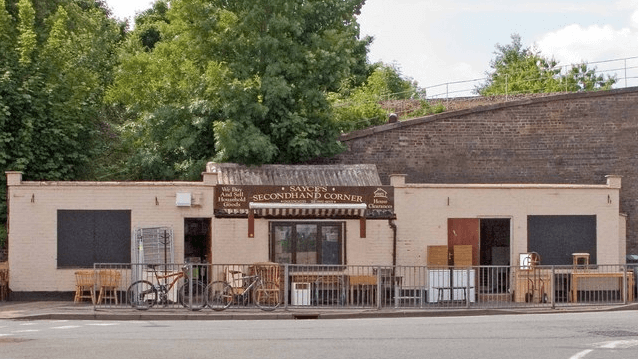
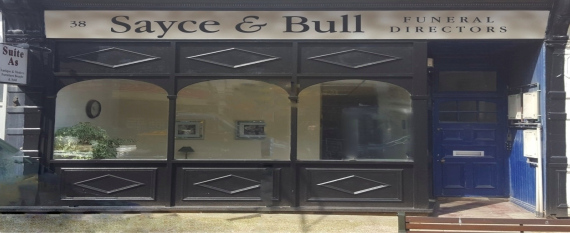
I have listed businesses by country which included the Sayce name in the business name or were founded by a Sayce.
Historic
Current
Historic
Anna Sayce Limited, 22 Prosser St, Porirua, Wellington, 5022.
R H Sayce Limited, 83b Ingrim Road, Drury, 2579. Roderick Hugh Sayce (1990-1999), now Famimly Care Pharmacy Limited.
Historic
Current
Historic
Current
Few people who use a coat of arms today have any actual right to do so. Armorial bearings do not appertain to all persons of a given surname, but belongs to and identify members of a particular family. Coats of arms and crests are a form of property and may only be used by the male-line of the individual to whom it was first granted.
Over the centuries, many families have simply assumed arms and crests belonging to other families of the same name, usually without authority. The erroneous use of adopting the arms of a family of the same surname detracts from the basic purpose of coats of arms and crests, which is to provide hereditary symbols by which particular families may be identified.
Grants of new arms have been made to worthy applicants, on payment of fees, since the fifteenth century. The practise continues to this day, and in addition to grants of honorary arms are occasionally made to foreign citizens of British male-line descent.
Mottoes are often associated with heraldic devices and may provide a useful clue in the identification of arms. However, there is no monopoly on the use of a particular motto, and the same motto may therefore be used by many different families.[1]
A coat of arms technically refers to the cloth covering worn by knights over their armour to display their arms. Arms is the correct term used to describe what we call today a Coat of Arms or Family Crest, with a Crest being the charge (symbol) over the helmet, so both terms coat of arms and family crest are the same thing. As with most family Coat of Arms, there are many variations provided by online sources.
The examples below are a Sable chevron between three spearheads argent their three points. The Sable represents the colour black, which in turn designates allegiance and loyalty. The Crest is a demi lion as in the arms.[2][3]
The family motto is ‘Crescit sub pondere virtus’.
Another example contains Quarterly gold and black. The crest is a bull’s head emerging from the crown.
The family motto is ‘Fare et age’.
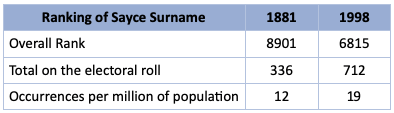
The table below compares the ranking of the Sayce surname from 1881 to 1998.[1]
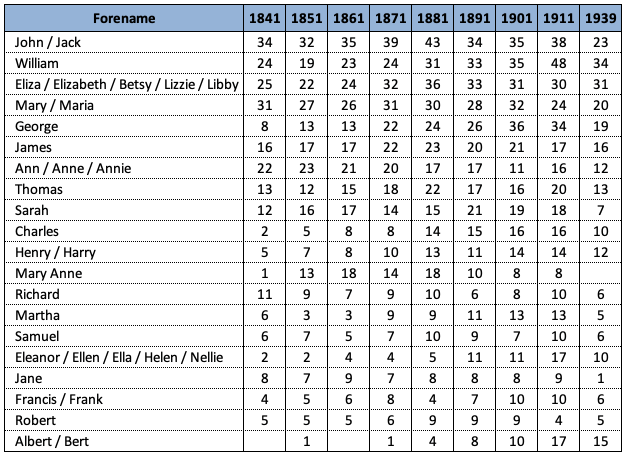
 The table below lists the top 20 most frequently used forename found, as per the 1841-1911 census records and the 1939 UK Registers for the UK. Included are those records where the census official had spelt the surname incorrectly for people who were Sayce. In addition I have filtered out people whose surname was shown as Sayce, but were in fact not Sayce. Therefore my numbers will differ from those produced by certain genealogical websites which may include the errors mentioned. Because census records very often gave nicknames, I have grouped the real names and relevant nicknames together.
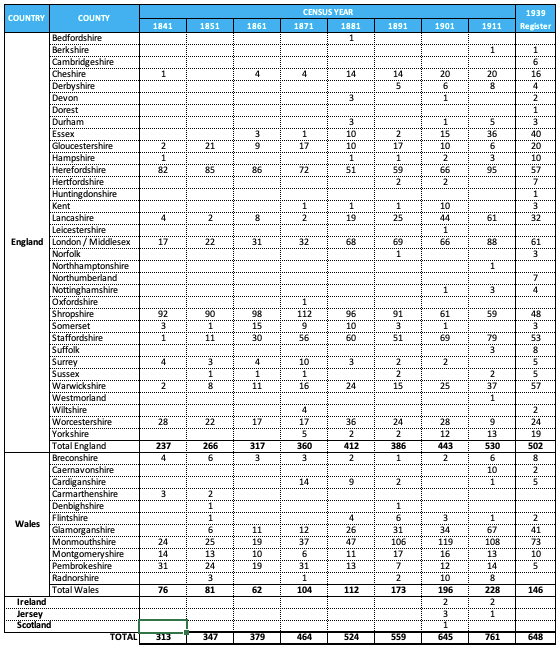
Given the history of the Sayce family name, it is not surprising that the Sayce families were concentrated on the Welsh/English border region. In the West of England, these are the counties of Shropshire and Herefordshire, and in the East of Wales, the county of Monmouthshire.
Parish records of the 1700’s indicate that the Sayce’s were mostly found in the counties of Shropshire and Hereford.
In Shropshire, they were predominantly found in the town of Bishops Castle. They were also found in surrounding towns, such as Lydbury North, Burford, Ludlow, Mainstone, Much Wenlock and Oswetry.
In Herefordshire, they were more spread out, but found mainly in the towns of Hereford, Abbey Dore, Dilwyn, Kilpeck, Moreton Jeffries, Monkland, Mordiford, Pembridge, Staunton-on-Arrow, Wellington, and Weobley.
A large number of families had by the 1700’s moved to London, attracted by the opportunities for work, etc. Isolated families could be found in the counties of Essex, Gloucestershire, Hertfordshire, Norfolk, Surrey, and Worcestershire.
The 1881 Census records show that that he highest concentration of Sayce families are still found in Shropshire and Herefordshire. The 1891 Census records show how this concentration was still evident, with numbers of families having moved to adjoining counties in search of work opportunities, etc.
A comparison of the two maps below1 show the Sayce population density change from 1881 to 1998. Interestingly, the highest density is still mainly in Wales and western regions of England adjoining Wales.
I have categorised the UK census records (1841-1911) as well as the 1939 UK Registers and shown them by country and county. Included are those records where the census official had spelt the surname incorrectly for people who were Sayces. In addition I have filtered out people whose surname was shown as Sayce, but were in fact not Sayces. Therefore my numbers will differ from those produced by certain genealogical websites may which include the errors mentioned.
The table below is a summary of my listing. It is interesting to see the decline in numbers from 1911 to 1939, most likely due to the impact of the First World War.
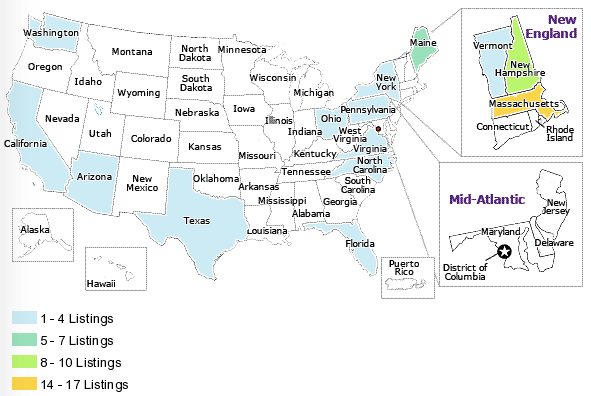
The highest concentration of Sayces was orignally found in Massachusetts. From these counties the Sayces migrated to the coastal regions of the USA.
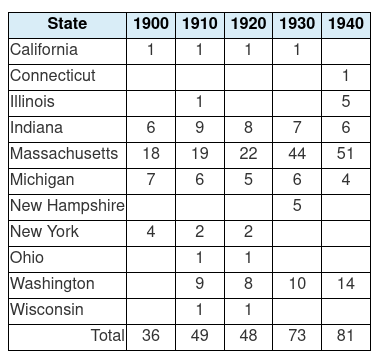
I have produced the listing below from the 1900-1940 US census records. I have verified these records against my personal records and family trees in order to elimate including records with incorrect spelling of the Sayce surname
Records relating to emigration from the UK in the 1700’s are rare. Settlers in the colonies of that time were principally either rich landlords or sailors who had abandoned the sea life to settle. For example, reference is made in a 1834 document of Fortune Sayce (b.1768), a negro carpenter, who was a slave to Marie Seraphine Davies in Trinidad1. Was he named after a landlord or a sailor?
With the advent of assisted passage to the colonies in the 1800’s, a number of Sayce families emigrated to the colonies. However, passenger lists and other records relating to this movement of Sayce’s provides very little help as most of these records referred to ‘Mr’, ‘Mrs’ or ‘Miss’ Sayce. Also many records only gave peoples initials, and ages / date of births are mostly inaccurate.
I will shortly be adding to this page a list of Sayce’s who left the United Kingdom for the colonies.
A number of Sayce’s served in military service and many gave their lives for their country. These heroes are listed below according to the sphere of war they fought in.
In the course of my research I came across this amusing prose written during the Anglo-Boer War written by E. Hallewell, referring to an unknown "blooming sayce".[7]
THE ARMY SERVICE MAN.
“ Tearin' onward thro' the land, marchin' day an' night,
A-flankin' 'ere, attackin' there, till the last big finishin' fight,
'Is country's proud of Tommy, the man as carries the gun,
But what of the Army Service Man and what of the work ‘e’s done?
It's ' waggons ' up, an' clothin ' 'ere, and grub for everywhere,
An' the non-combatant ' A.S.M. ' 'as got to get it there.
So ‘e 'as to get up with the bloomin' sun an' stay up with the bloomin' moon
A shovin' on stores of every kind from boots to a war balloon.
" There's Bobs a-sittin' in Bloemfontein, an' Buller in Natal,
Methuen up at Kimberley, Clements near Aliwal,
All of 'em openin' 'ungry months for everything under the sun,
Without the Army Service Man-Oh, what price 'im with the gun?
It's ' girders ' 'ere, an' ' pontoons ' there, an’ ’stores for the 'ospital base,'
Odds an' ends for the gen'ral staff, and rice for the bloomin' sayce,
An' the further they go the more they want, an' the 'arder it is to send ;
But the ‘A.S.M.' 'as to get it there if it cost 'is life in the end.
“ There's them that looks down on the ' A.S.M.' cause 'e ain't at work with a gun,
But 'e's daily sweatin' his level best at work which 'as got to be done,
For a gun's no good nov the man be'ind without both powder and grub ;
When the army wheel's a moving round, the ‘A.S.M's' the ‘ub.
Oh, it's ' forage ' 'ere, an' ' sleepers ' there, all sorts by the 'underd ton,
An' the ' A.S.M.' 'as to 'andle the lot, an' get none of the fightin' fun ;
'E gets scanty sleep an' curses free, an' 'e ain't much time to dine.
But 'e's doin' 'is dooty for Country and Queen when 'e's feedin' the fightin'line."
E. HALLEWELL.
Occupations of people in past centuries have largely been determined by family trades being passed from generation to generation or by the agricultural, industrial or mining activities of particular regions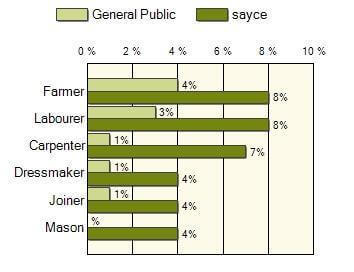 .
.
The adjacent table shows the top occupations for Sayces as compiled by www.ancestry.co.uk for head of households from the 1881 UK Census records. Interestingly, three of the top 6 occupations are related to the building industry; namely carpenter, joiner & mason.
In discussions with descendants of Sayce families around the world, I have been amazed at how many of them are working in the building and related industries. For instance, of the nine Sayce men born in South Africa, four have been or are working in the building or related industries.
.
The Sayce name has been associated with a number of inventions which were patented. These include:-
Useful Registered Design Number : 1469 registered by Joseph Sayce of 53 Cornhill, London on the 8th June 1848, under the Category Wearing Apparel for a Easy Morming Coat ("The Tiona").
The following was a advertisement for the coat:-
Patent -- For travelling by railway or by the other public mediums, as well as for general winter wear, the new garment, known as SAYCE's PATENT TRAVELLING COAT, claims especial notice, inasmuch as that by its adoption convenience and comfort are insured, in conjunction with the preservation of a decidedly gentlemanly appearance. The usual prices are 2 and 3 guineas - J. Sayce and Co., tailors to H.R.H. Prince Albert, and patentees also of the Piuma or Six Ounce Coat -- 53, Cornhill
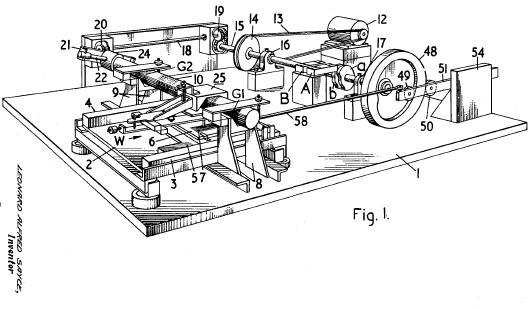
U S Patent No. 2,721,389 dated 25 October 1955 for ‘Production of Rulings such as those of Diffraction Gratings. Leonard was at the time an assignor to the National Research development Corporation, London. This invention relates to the ruling of diffraction gratings or the like and is concerned more specially with the production of rulings which take the form of a plurality of equally spaced parallel grooves or lines inscribed or ruled upon a surface by means of a toll such as a scribing tool.
As with many names, the Sayce name has also been used for strange or weird things. I came across the following on the net, which you may find entertaining, or interesting – if you are into fantasy.
“The sayce is a xenoc creature native to the jungles of Amarisk, on the frontier world of Lalonde. It is a dog-analogue (and is a similar size to a large earth canine) but has a distinctly catlike appearance, with a strong, streamlined body covered in jet-black scales. The sayce has six-clawed paws and a wedge-shaped head, with flat, triangular ears, green-tinted eyes, a blue tongue and powerful jaws equipped with sharp fangs.
It is a very intelligent animal (scoring higher in intelligence than terrestrial dogs) but is also extremely aggressive, not averse to tackling a human or members of its own species. Surprisingly, the sayce is a good mimic and able to learn and speak human words; it is thus able to communicate with humans in a rudimentary way.
Although sayce are fierce predators, they are also capable of co-operating with the human settlers on Lalonde and forming bonds not unlike the relationships between dogs and humans on earth.
Certain bars in Durringham organise savage fights to the death between sayce — a good “baiter” can earn plenty of cash for its human owner. In these fights, experience counts as much as physical strength, and a veteran sayce often has a good chance of winning. An older sayce has a generally battered and scarred appearance; ageing also has an effect on the sayce's hide, which becomes flecked with blue spots.
In a similar way to some terrestrial creatures such as cats and dogs, the sayce is capable of displaying a sensitivity to energies not usually perceived by humans; at least on one occasion a sayce has correctly identified a group of possessed as being somehow different to normal humans, and has then expressed appropriate fear and caution.”1
created with
HTML Website Builder .